

The Overlooked Pillar of Sustainability: Teaching Kids How Money Works
By Sneha Nandkeolyar

Introduction: Sustainability Isn't Just Environmental
When people hear the word “sustainability,” they might think about solar panels, ocean cleanups, or cutting down on plastic waste. Those things are important, but sustainability also has an economic side. Economic sustainability is one of the three main pillars of sustainable development, along with environmental and social sustainability (Brightest, 2026). At its core, it asks whether people have the resources and opportunities they need to build stable lives and participate in the economy.
Financial literacy is an important part of that. Knowing how to budget, save, manage money, or understand basic financial decisions can affect someone's opportunities for years. However, people don't all get the same chance to develop those skills. A 2015 international study discussed by the Consumer Financial Protection Bureau found that differences in financial literacy connected to socioeconomic status can already be seen by age 15 (CFPB, n.d.). That means the gap can begin before teenagers have much experience managing money themselves.
Where the Gap Begins
Financial literacy is not evenly distributed. Only 18% of high school students consider their own financial literacy to be “somewhat high” or “very high” (SPARK Institute, as cited in United Way NCA, 2026). Gen Z and Millennials also have some of the lowest financial literacy scores among the generations surveyed (Moneyzine, 2024).
Income plays a role, too. Only 28% of Americans earning less than $25,000 a year are considered financially literate, and research from the FINRA Foundation has identified teens and low-income households, as well as Black and Hispanic communities, as groups that can be especially vulnerable to the effects of low financial literacy (United Way NCA, 2026).
These differences can have consequences long after high school. Someone who never learns how to budget or save may feel less prepared to negotiate a salary, start a business, or build savings later in life. The problem is that financial knowledge tends to build over time. If some students start learning these skills early while others don't have the same opportunities, the gap can become harder to close.
A Classroom Economy which Fits
This is the problem EquityEcon, a youth economic empowerment project, is trying to address. Instead of asking schools to add another class or curriculum to an already busy schedule, EquityEcon uses things that are already part of a classroom.
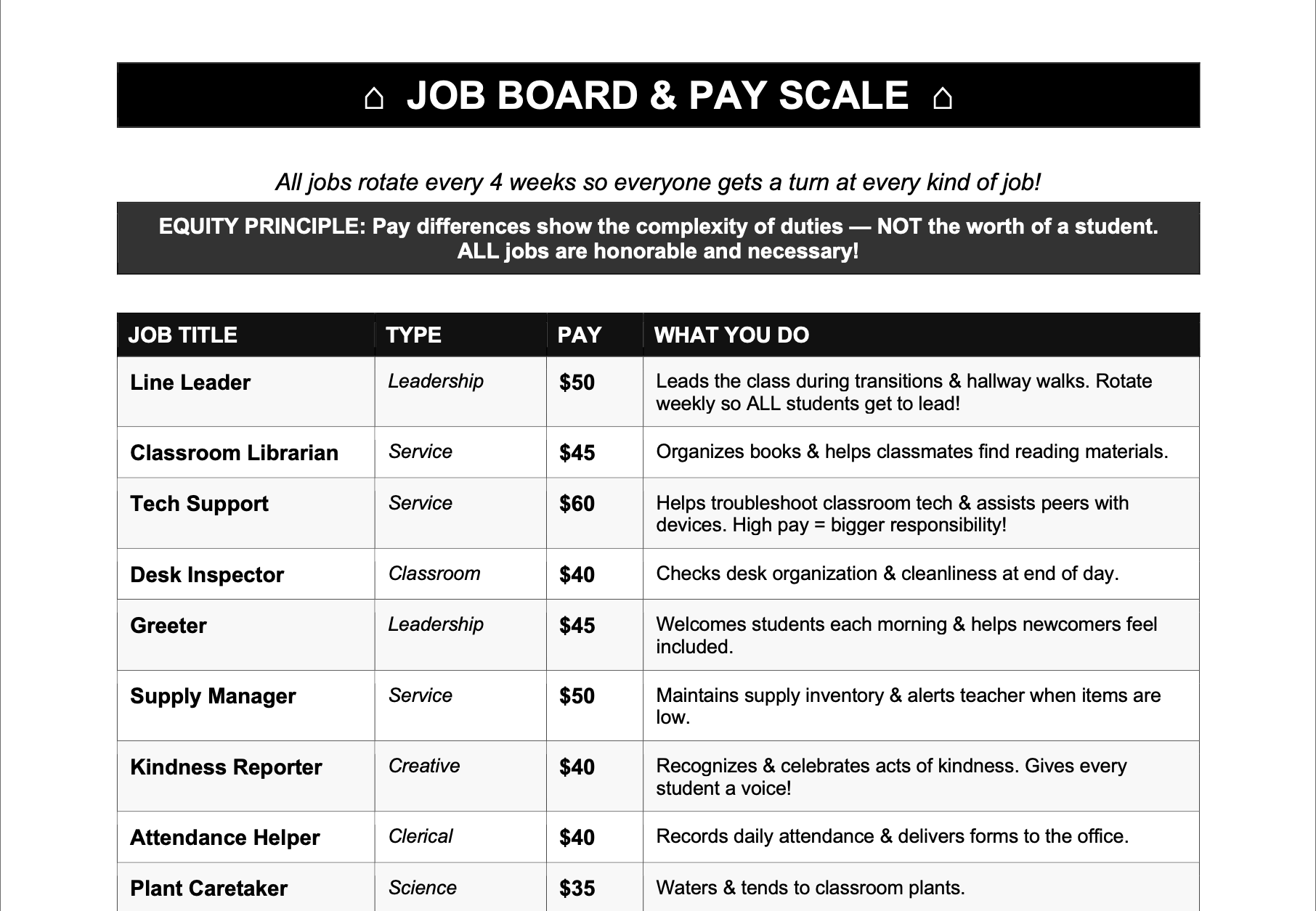
Students can have jobs such as line leader or materials manager and earn classroom currency for their work. They can apply for jobs, pay weekly desk rent, save money in a classroom bank, and buy or sell items through a classroom marketplace. The goal is to give students a chance to experience basic economic ideas themselves rather than only hearing about them.
Because everyone starts with the same amount of classroom currency, students have the opportunity to participate regardless of their financial background outside of school.
What It Looks
Over the past year, EquityEcon brought this idea into local classrooms through hands-on workshops that reached between 90 and 150 students. Each workshop approached financial and economic concepts a little differently.
In Pitch Perfect Drinks, students created an original drink, decided how much to charge for it, and pitched their idea to others. Shark Tank Class Edition gave students a similar opportunity to develop and present their own products or services to a panel of classmates.
The Budget Challenge introduced younger students to the idea of making choices with limited resources. Second and third graders received a fixed classroom paycheck and had to decide how to spend it on school supplies. They couldn't simply buy everything they wanted, so they had to make trade-offs.
Then there was the Monster Job Interview. Students practiced interviewing skills through a silly monster-themed activity. According to one teacher, the activity even encouraged a student to speak in front of the class for the first time that year.
That is one of the things that makes the program meaningful. The lessons aren't only about money. They also give students opportunities to make decisions, explain their ideas, and participate in ways they might not normally get to.
Why the Economics of a Classroom Matter for the Planet
Financial literacy and environmental sustainability can seem like completely different subjects. In reality, they overlap more than we might expect.
The people who grow up without opportunities to learn about saving, budgeting, or entrepreneurship may also have fewer opportunities later to participate in decisions about how their communities use money. That can include decisions about environmental projects, sustainable businesses, and community programs.
Teaching a ten-year-old about rent, saving, or running a small business obviously won't solve every economic or environmental problem. But it can give that student an early understanding of how decisions about money work. Over time, that knowledge can help students become more confident making decisions and participating in their communities.

How You Can Help
EquityEcon has created a free, publicly available resource database at https://equityecon.base44.app. It includes resources such as a Job Application Form, Weekly Budget Tracker, Classroom Bank Setup Guide, and full Kickoff Guide. Teachers can download the materials for free and use them to create a classroom economy without having to develop an entirely new curriculum.
If you're a teacher, know a teacher, or work with students, sharing these resources is a simple way to help make financial education more accessible. EquityEcon also shares classroom stories and new resources on Instagram at @equityeconproject.
Sustainability is usually discussed in terms of the world we leave behind. But it also has to do with the opportunities we give the next generation. Giving students a basic understanding of how money and the economy work is one small way to help them become more prepared to shape that future.
Citations
Brightest. (2026, April 17). The three pillars of sustainability. https://www.brightest.io/three-pillars-sustainability
Consumer Financial Protection Bureau. (n.d.). What international data tells us about youth financial literacy.https://www.consumerfinance.gov/archive/blog/what-international-data-tells-us-about-youth-financial-literacy/
Moneyzine. (2024, November 18). US financial literacy statistics 2026: Key demographics & cost.https://moneyzine.com/personal-finance/financial-literacy-statistics/
United Way NCA. (2026, April 21). Why financial literacy for teens matters. https://unitedwaynca.org/blog/financial-literacy-for-youth/
Have a project connecting sustainability and economic equity? We'd love to hear about it. Reach out through our Guest Blog Submission page.


