A State of Plastic
Ivanka Gibson
Living in Florida, it is difficult to separate the state from its water. Beaches, rivers, springs, and coastal communities are part of everyday life, and protecting them is an issue that comes up often. Plastic waste is one of the most visible problems. Bags, food containers, wrappers, and other disposable products can be found along roadsides, beaches, and waterways.
What I did not realize until looking more closely at the issue was that many Florida communities have limited authority to decide how they want to address certain types of plastic waste. That limitation is tied to a process that has now lasted for years: the Florida Legislature restricted local regulation, directed the state to study the issue, received an updated report, and still has not taken the action required by the law to move beyond that restriction.
Under Florida law, local governments are generally prevented from adopting their own regulations involving certain disposable plastic bags, wrapping, and auxiliary containers. The restriction dates back to 2008, when the Florida Legislature directed the Department of Environmental Protection (DEP) to study whether the additional regulations on retail bags were necessary.
The law was later updated to require the DEP to revisit that research. Florida Statute 403.7033 currently states that local and state government agencies may not enact certain regulations involving these materials until the Legislature adopts DEP’s recommendations.
The Impact on Florida
The concern surrounding plastic pollution is not hypothetical. The updated 2021 Retail Bags Report included an estimate that roughly 7,000 tons of plastic entered Florida’s marine environment in 2020.
Cleanup data included in the report recorded more than 542,000 large pieces of litter collected from Florida shorelines that year. The report also found that the number of plastic grocery bags collected during Florida cleanups increased by 93 percent between 2013 and 2020.
DEP also notes that plastic pollution can harm wildlife through ingestion and entanglement, as well as affect coral reefs and aquatic vegetation. For a state with thousands of miles of shoreline, where local economies and daily lives are closely connected to the water, those findings make the issue difficult to ignore.
However, the question in Florida is not only how to reduce plastic waste. It is what happened after the state gathered information about it.
Requested by the Legislature
In 2021, the Legislature required DEP to update its earlier research on retail bags, auxiliary containers, and wrapping. The law specifically called for the report to examine both statewide and local regulation and to include conclusions and recommendations. DEP contracted with the University of Florida as part of that work and completed the updated report in 2021.
The report examined existing regulations, recycling and reuse programs, retailers' practices, alternatives to plastic bags, environmental effects, and possible regulatory and non-regulatory approaches. In other words, the state received the additional research that the statute required.
Yet the legal restriction did not disappear when the report was completed.
Florida Statute 403.7033 does not say that local authority returns once DEP finishes studying the issue. Instead, it says the restriction remains until the Legislature adopts the department’s recommendations. DEP completed its report, but the Legislature has not taken the final steps. As a result, the same provision continues to restrict what local governments and government agencies can do.
This is not simply an unresolved debate over whether the state or individual communities should regulate plastic waste. The Legislature created a process in which further action depends on its own response to a report it had requested. The report was completed, but the statutory restriction remains in the 2026 Florida Statutes.
Community Restriction Remains
The result is that communities facing different environmental conditions are still operating under the same limitation.
A coastal city dealing regularly with marine debris may see plastic waste as an immediate local concern. An inland community may view the issue differently. Ordinarily, those differences might lead communities to adopt different policies. Under the current statute, however, certain forms of local regulation remain prohibited because the Legislature has not adopted DEP’s recommendations.
There are arguments for keeping that authority at the state level. Businesses operating across Florida may benefit from having the same requirements everywhere, and consumers may find a consistent statewide policy easier to understand. Those considerations were part of a broader debate that DEP was directed to examine.
But the current situation is different from the Legislature simply choosing one statewide policy over another. Nearly five years after the updated report was required, the statutory language still conditions local authority on legislative action that has not yet occurred.
Repeated Attempts to Change the Law
Florida lawmakers have returned to the issue several times.
In 2024, Senator Linda Stewart introduced SB 498, which would have removed the state preemption involving certain plastic bags, wrappings, and auxiliary containers. The bill died in the Senate Commerce and Tourism Committee.
The issue returned in 2025. Representative Robin Bartleman introduced HB 6023, which also proposed removing the state’s restriction on local regulation. That bill died in the House Natural Resources & Disasters Subcommittee.
For the 2026 session, lawmakers considered a somewhat different approach. CS/SB 240 would have maintained the state preemption but created expectations and required DEP to develop a uniform ordinance that local governments could choose to adopt. It also proposed a statewide Marine Debris Reduction Plan. The bill passed its first Senate committee but ultimately died in an appropriations committee in March 2026.
Still Waiting on the Legislature
The most striking part of Florida’s plastic regulation debate is not simply the disagreement over whether the state or local governments should have more authority. The state required the DEP to study the issue and provide updated recommendations, and DEP completed that work in 2021. Yet years later, the underlying restriction remains in place, and repeated legislative attempts to address the issue have failed.
In the meantime, Florida continues to deal with plastic pollution in waterways and along its shorelines. The updated DEP report provided lawmakers with current information about the scale of the problem and possible approaches to regulation, but that information has largely been left without a final legislative response. The result is a system in which further action was supposed to follow additional study, the study was completed, and yet the law has continued largely unchanged.
Nearly two decades after the original restriction was created, the question is no longer only whether Florida should regulate plastic waste at the state or local level. It is also what happens when the state requests evidence, receives it, and leaves in place a law that prevents others from acting while it decides what to do next.
Citations
Florida Senate. (2011). Chapter 403 Section 7033—2011 Florida Statutes—The Florida Senate. https://www.flsenate.gov/laws/statutes/2011/403.7033
Florida Senate. (2026). Chapter 403 Section 7033—2026 Florida Statutes—The Florida Senate. https://www.flsenate.gov/Laws/Statutes/2026/0403.7033
House Bill 6023 (2025)—The Florida Senate. (n.d.). Retrieved September 16, 2026, from https://www.flsenate.gov/Session/Bill/2025/6023
Senate Bill 240 (2026)—The Florida Senate. (n.d.). Retrieved September 16, 2026, from https://www.flsenate.gov/Session/Bill/2026/240
Senate Bill 498 (2024)—The Florida Senate. (n.d.). Retrieved September 16, 2026, from https://www.flsenate.gov/Session/Bill/2024/498
Townsend, Dr. T., Anshassi, D., Malak, Robey, Dr. N., Nicholas, S., Gonzales, F., Ricketts, A., & Bielecki, J. (2021). 2021 Retail Bags Report. https://floridadep.gov/sites/default/files/FDEP%20Plastic%20Bag%20Report%20Final%20v4.pdf
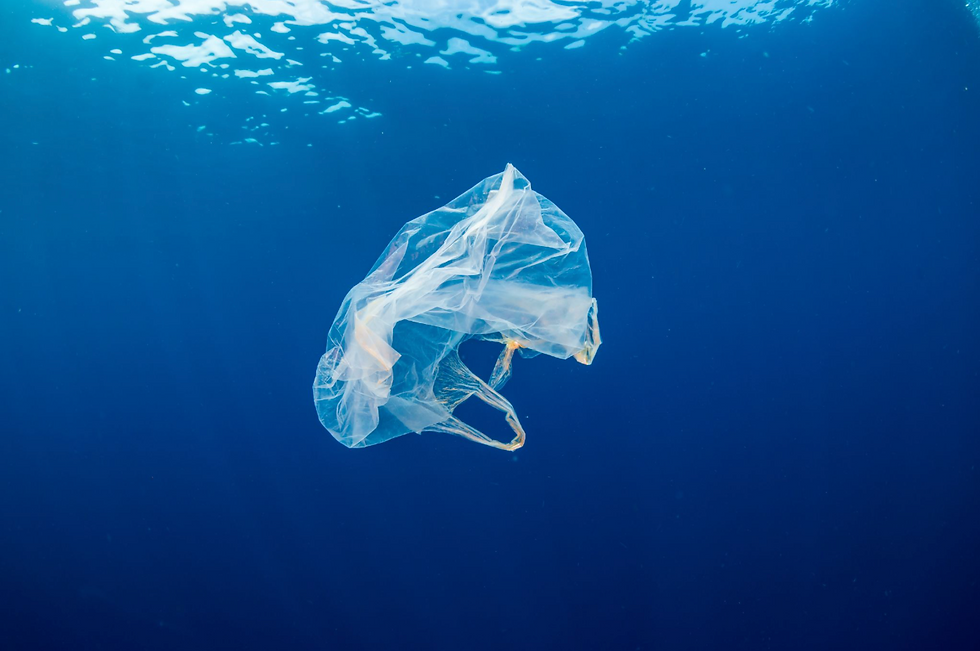
Whitcomberd. (n.d.). Plastic pollution:- A discarded plastic bag floats in a clear, blue water, tropical ocean Stock Photo. Adobe Stock. Retrieved September 27, 2026, from https://stock.adobe.com/images/plastic-pollution-a-discarded-plastic-bag-floats-in-a-clear-blue-water-tropical-ocean/232411156