The 2026 Truth in Labeling Act: Importance of Sustainable Products and Greenwashing Risks
Lauren Multari

One of the most common environmentally friendly practices that is encouraged of individuals is sustainable practices. However, this is not always a straightforward decision. Products with sustainable labeling are often receivers of higher customer support. Yet a lack of universal regulation has allowed organizations to blindside customers and create a false sense of responsibility. As a result, the 2026 Truth in Labeling Act was created to increase corporate responsibility and customer satisfaction.
The TRUTH in Labeling Act was first introduced in the House of Representatives on July 23rd, 2025, originally supported by four democratic representatives from Connecticut, Texas, Minnesota, and Indiana. As of April 27th, 2026, the bill now contains nine different cosponsors. This version of the act, formally cited as the Transparency, Readability, Understandability, Truth, and Helpfulness in Labeling Act, initially served to increase consumer awareness of sugar, sodium, fat, and other nutritional aspects. Most recently, a new version of the Truth in Labeling Act of 2026 has been proposed, targeting labels for recyclable and related purposes. Introduced on August 6th of 2026, the bill aims to help decrease the significant consumer confusion in recyclable, compostable, reusable, or refillable products.
Many different types of packaging exist today. The various materials used for packaging include glass, wood, plastic, cardboard, and others. Primary packaging refers to the materials primarily used to protect the products being transported. This level of packaging is in direct contact with the product, and can include protective boxes and wrappings. Materials not in direct contact with the product, but still protecting it, are secondary packaging. Mainly, secondary packaging helps keep bulk products in place during the shipping process without damaging them. With the exception of cardboard trays and similar products, the majority of materials utilized are plastics. Styrofoam bunnies have become less popular in recent years due to their known environmental impacts, but materials such as plastic bubble wrap continue to be used. Although occasionally recyclable, not all systems are able to accept it, leading it to eventually make its way into water streams and landfills. Lastly, tertiary packaging refers to the boxes and containers products are placed in, along with the secondary packaging. Like cardboard boxes and wood pallets, this makes up much of the disposed packaging individuals may see.
The Truth in Labeling Act seeks to accomplish its mission by establishing national definitions for recyclable, compostable, reusable, and refillable. With these meanings established, products would then include the proper use of the chasing arrows symbol. While these symbols often lead to well-intentioned recycling efforts, it can be difficult for individuals to understand the nuances and efficiency of recycling efforts. In turn, this would encourage producers to include the symbols on their packages and educate consumers on the necessary disposal actions. Those packages that can not be recycled or used by an associated behavior would then become more apparent. Ultimately, this standardized practice of product labeling would both aid production regulations, municipal recovery facilities, assist in public education, and reduce costs and waste. After being introduced to the House of Representatives and referred to the House Committee on Energy and Commerce, the bill has yet to see further action. The bill is currently spearheaded by sole sponsor, democratic Representative Ami Bera of California’s District 6.
Underlying this bill is the unique and nuanced psychology of greenwashing. Greenwashing can be defined as the act of making false or misleading statements about the environmental benefits of a product or practice. Through these deceptive behaviors, companies may be able to disguise environmentally destructive behaviors while increasing consumer support and revenue. For example, in 2018, Starbucks launched ‘straw-less lids’. These were meant as a strategy to increase customer support through the decreased use of plastics, yet the new lids contained even more plastic than the previously used straws. Additionally, IKEA has maintained a reputation as a sustainable organization, despite being linked to illegal logging in Ukraine in 2020. However, if exposed, severe consequences may result for the organization. In general, organizations do not require third-party assurance for non-financial information, which includes environmental, social, and governance (ESG) disclosures. Engaging a third-party source can increase the validity of ESG disclosures, and if proved to be faulty, can result in immediate loss in investors and long-term risk to company trust and reliability.
While the Truth in Labeling Act directly aims to target product labeling, greenwashing can include all forms of advertisement, from declarations to media graphics. Some of these general statements may appear as obscure or ultimately irrelevant, and may be miscommunicated throughout the organization. Nonetheless, consumer support for sustainable products remains strong. Even when no one is watching, American consumers are willing to pay more for sustainable products. Three in four consumers either actively or passively prefer sustainable products, with the interest in sustainable products increasing in the past three years alone. Truthful labels are key in ensuring this trend continues.
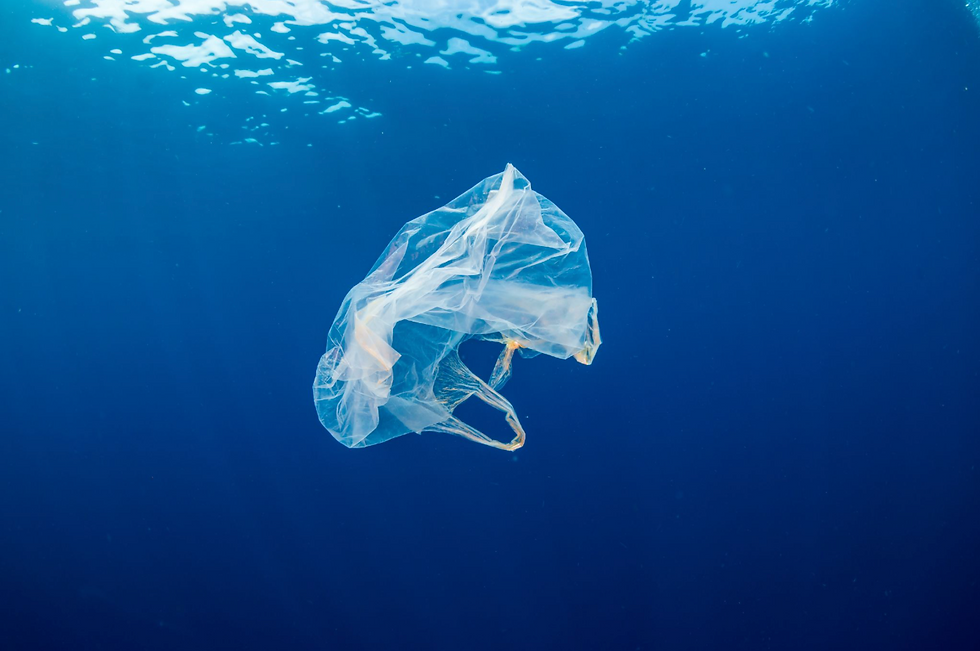
The emergence of ESG disclosures are due to increasing environmental and social harm resulting from corporate action. Each year, over 200 million tons of plastic packaging is produced globally. Shockingly, only 9% of all plastic ever produced has been properly recycled. Packages not recycled end up in landfills, or worse, in terrestrial and marine environments. 11 million metric tons of plastic enters marine environments annually, potentially disrupting animal digestive systems and the food web.
Terrestrial environments are experiencing increased rates of deforestation in order to provide the materials necessary for plastic and unsustainable packaging. Deforestation directly impacts communities who are reliant on thriving forest regions for shelter, livelihood, and food. The root systems of plants and trees play a critical role in stabilizing and binding soil, which in turn decreases susceptibility to erosion and nutrient loss. Without the proper growth of root systems, nearby residential areas and infrastructure may be threatened. Trees also help regulate atmospheric CO2 levels, and the lack thereof can result in the record-breaking summer heat experienced across the world.
The 2026 Truth in Labelling Act poses as a solution to false sustainable advertising and social and environmental justice. The policy process is often lengthy, and can be upwards of years before a floor vote is held. While the bill continues to be reviewed and amended, action is possible. Calling representatives and informing them of the bill, and requesting their support and co-sponsorship, is of the utmost importance. Accurate labeling poses economic, social, and environmental benefits for all involved, and uplifts communities across the globe.
Citations
Chesshir, Hayley. (2024). Types of Packaging: Primary, Secondary & Tertiary. Paramount Global. www.paramountglobal.com/knowledge/types-of-packaging/
Davis, Dwight. (2025). The Environmental Impact of Packaging Waste: What You Need to Know. Container & Packaging. www.containerandpackaging.com/resources/the-environmental-impact-of-packaging-waste-what-you-need-to-know/?srsltid=AU7gw4VFqhl7Xb2T5Y7SE3J0LoIpqLeMTcadHHXlpFno1HXKzRptiurG
Lindwall, Courtney. (2023). What Is Greenwashing? NRDC. www.nrdc.org/stories/what-greenwashing
May, Diane. (2025). Two-thirds of Americans Are Willing to Pay More for Sustainability. Ceres. www.ceres.org/resources/news/two-thirds-of-americans-are-willing-to-pay-more-for-sustainability
Ooi, K.L., Binti Ab Aziz, N., Lau, W.Y. (2025). The Psychology of Greenwashing and ESG Disclosures. In: Following the Crowd: Psychological Drivers of Herding and Market Overreaction. Springer, Singapore. link.springer.com/chapter/10.1007/978-981-95-0792-4_14
Robinson, Deena. (2022). 10 Companies Called Out For Greenwashing. Earth.org. earth.org/greenwashing-companies-corporations/
Rottman, Joshua. (2023). Recycling Isn’t Virtuous; It’s Making Things Worse. Psychology Today. www.psychologytoday.com/us/blog/moral-boundaries/202304/recycling-isnt-virtuous-its-making-things-worse
Van Zijl, Mark. (2026). Is bubble wrap recyclable and what are greener options for art packaging? BIYO Map. biyomap.com/en/knowledgebase/is-bubble-wrap-recyclable-and-what-are-greener-options-for-art-packaging/
(2024). The Effects of Deforestation). Climate Impact Partners. www.climateimpact.com/news-insights/insights/effects-of-deforestation/
H.R.4725 - 119th Congress (2025-2026): TRUTH in Labeling Act. (2025, July 23). https://www.congress.gov/bill/119th-congress/house-bill/4725
Text - H.R.10048 - 119th Congress (2025-2026): Truth in Labeling Act of 2026. (2026, August 6). https://www.congress.gov/bill/119th-congress/house-bill/10048/text/ih