The Value of a Bottle
Ivanka Gibson

During visits to my father in Germany, I began to notice something that seemed completely ordinary to the people living there but remarkable to me: returning bottles was simply part of everyday life.
At grocery stores, customers routinely arrived carrying bags filled with used plastic and glass containers. They fed each bottle into a reverse-vending machine, watched as the machine scanned and sorted the items, and received a receipt that could be applied toward their groceries or exchanged for cash. The process was efficient and nearly effortless. There was no uncertainty about whether a container belonged in a recycling bin, no confusion about what would happen after it was disposed of, and no sense that recycling was an inconvenient responsibility.
Instead, returning bottles felt as routine as buying groceries.
What fascinated me was not the technology behind the machines, but the larger system that made them so effective. Germany’s bottle deposit-return program, commonly known as the Pfandsystem, demonstrates how environmental policy can influence everyday behavior when it combines financial incentives, widespread accessibility, and individual responsibility. Rather than depending solely on people making environmentally conscious choices out of personal commitment, the system creates conditions where the sustainable choice is also a practical one.
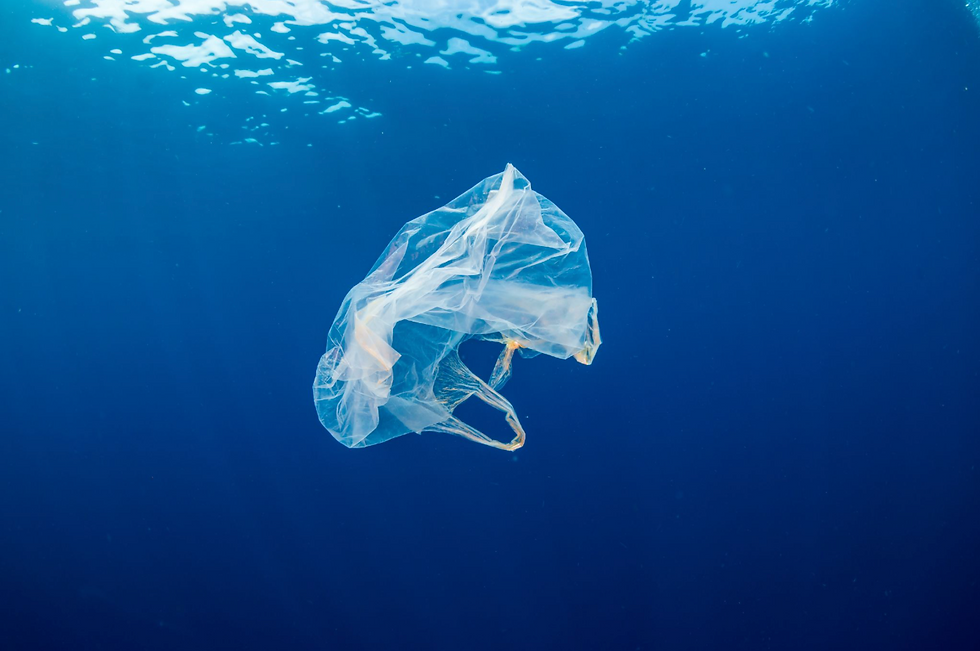
Germany’s approach reveals a challenge faced by many countries, including the United States: although recycling has been promoted for decades, the systems developed around it often make sustainable choices inaccessible, confusing, and seemingly not worth the effort. This need for more effective solutions extends beyond national borders, as global plastic production has reached approximately 430 million metric tons annually, with packaging accounting for roughly 36% of this total (Rogin & Corkery, 2024). Moreover, an estimated 85% of single-use plastic items ultimately end up in landfills or the environment rather than being recycled (UNEP, 2023).
How the Pfandsystem Works
In 2003, Germany introduced a deposit on certain non-reusable beverage containers in response to growing environmental concerns (Gargani et al., 2003). Germany’s deposit system operates through two primary categories of containers: single-use and reusable bottles. Although both categories encourage consumers to return their containers, they serve different purposes in reducing waste.
The first category, known as Einwegpfand, applies primarily to single-use plastic bottles and cans. Consumers pay a deposit of 25 euro cents when purchasing a beverage and receive that money back after returning the empty container. These containers are then collected and processed for recycling (De Bellis, 2020).
The second category, Mehrwegpfand, applies to reusable containers, often made of glass or durable plastic. These bottles generally carry deposits between 8 and 15 euro cents and are designed to be cleaned, refilled, and returned to circulation dozens of times before eventually being recycled (De Bellis, 2020).
The distinction is one of the system’s greatest strengths. Rather than treating all waste management methods the same, Germany recognizes that preventing waste is often more effective than managing it after it has been created. Recycling remains an important part of the process, but reusable bottles extend the life of a container and reduce the need to produce new packaging.
Beyond the design of the system itself, convenience is another reason the Pfandsystem has been so successful. With approximately 135,000 return locations, Germany allows consumers to incorporate bottle returns into existing routines instead of treating them as an additional responsibility (TOMRA, 2026). By making collection points widely accessible, the system removes one of the biggest barriers to participation: inconvenience.
The effectiveness of this approach is reflected in its results. Germany’s deposit-return system achieves return rates of approximately 98% for eligible single-use beverage containers (TOMRA, 2026). These high rates demonstrate that when environmental responsibility is supported by clear incentives and an accessible system, participation can become routine.
Giving Waste Value
While walking through Cologne with my father, I observed one of the most revealing examples of Germany’s bottle-return culture. Along the streets, empty bottles were often placed beside public trash bins rather than thrown away. They were left there intentionally so others could collect them and redeem the deposits (De Bellis, 2020). This everyday practice showed that the Pfandsystem had influenced more than recycling habits; it had changed the way people understood the value of discarded materials.
At first, this seemed like a small social habit. However, it demonstrated one of the Pfandsystem’s greatest strengths. By assigning monetary value to discarded containers, the system changes the way people view waste. A bottle is no longer just something to throw away; it becomes something worth returning, collecting, or passing along. Even when the person who purchased the bottle does not return it themselves, the deposit creates an incentive for someone else to recover it.
The system is effective because it does not depend on everyone having the same motivation. Some people return bottles because they want their deposit back. Some collect abandoned bottles because the extra money is valuable to them. Regardless of the reason, the result is the same: more containers are recovered, fewer end up as litter, and recycling becomes integrated into ordinary behavior.
A Deposit-Return Future for the U.S.
Recycling is widely encouraged in the United States, but it is not always designed to be convenient. While governments, public campaigns, and recycling symbols promote environmental responsibility, the process itself can be confusing, and to many, not worth the inconvenience. Rules vary from one community to another, accepted materials differ, and many people are left wondering whether the items they recycle will actually be processed. Unlike Germany’s Pfandsystem, many recycling programs in the United States rely more on individual initiative than on convenient, well-designed collection systems.
Germany’s success suggests that effective recycling systems do more than ask people to make environmentally conscious choices; they make those choices easy. Although several U.S. states have adopted bottle-deposit laws, the rules, deposit amounts, and eligible containers differ widely, and most states have no deposit-return program at all (TOMRA, 2023). A more consistent national approach could make bottle returns a familiar part of everyday life. Standardized deposits, clearly marked return locations, and reverse-vending machines in supermarkets and other retailers would give consumers a simple, reliable way to return their containers.
The United States could also place greater emphasis on reuse, not just recycling. Germany’s refillable bottle system keeps containers in circulation for years before they are recycled, reducing the need to manufacture new packaging. When walking through an Aldi in Germany, it is common to see beverages packaged in refillable bottles that would typically be sold in single-use plastic bottles in the United States. These bottles are designed to be reused multiple times, making waste reduction a natural part of the purchasing process rather than an additional effort after consumption. While the United States would need to adapt Germany’s approach to fit its own infrastructure and consumer habits, the Pfandsystem is an example of how thoughtful design and practical incentives make sustainable choices both convenient and effective.
Lessons from Germany
Germany’s Pfandsystem demonstrates that lasting environmental progress depends on more than public awareness alone. People are far more likely to participate when expectations are clear, return locations are convenient, and discarded materials retain financial value. The program succeeds because it does not rely on individual goodwill alone; it creates practical incentives that make recycling and reuse part of everyday life.
Creating a similar system in the United States would not happen overnight, but Germany’s success demonstrates that meaningful progress is possible. By making sustainable choices more convenient and rewarding, the Pfandsystem has transformed bottle returns into an everyday habit rather than an environmental obligation. Although every country must develop policies suited to its own infrastructure and needs, Germany offers an encouraging example of how thoughtful incentives can support a more sustainable future.
Citations
De Bellis, A. (2020). Sustainability of the German deposit system: Case study in Berlin: Investigation and analysis of environmental and social aspects of bottle collection | Master’s thesis, Politecnico di Torino | Webthesis. https://webthesis.biblio.polito.it/13778/1/tesi.pdf
EdNurg. (2018). 22 May 2018, Leipzig, Germany: Woman friends together at the reverse vending machine recycle plastic bottles, ecology concept [Stock photograph]. Adobe Stock. https://stock.adobe.com/search?k=pfandautomat&asset_id=293552960
Gargani, G., Rothley W., Lehne K., Manders, T. (2003, October 9). Pregunta parlamentaria | Régimen alemán de depósito | O-0066/2003 | Parlamento europeo. https://www.europarl.europa.eu/doceo/document/O-5-2003-0066_ES.html
Rogin, A., & Corkery, A. (2024, March 16). The plastic industry knowingly pushed recycling myth for decades, new report finds | PBS News Weekend. PBS. https://www.pbs.org/newshour/show/the-plastic-industry-knowingly-pushed-recycling-myth-for-decades-new-report-finds
TOMRA. (2023, September 8). Bottle bill states and how they work | TOMRA. https://www.tomra.com/reverse-vending/media-center/feature-articles/bottle-bill-states-and-how-they-work
TOMRA. (2026, June 15). Germany’s Effective Deposit Return Scheme Explained | TOMRA. https://www.tomra.com/reverse-vending/media-center/feature-articles/germany-deposit-return-scheme
United Nations Environment Programme. (2023, April 25). Everything you need to know about plastic pollution. UNEP. https://www.unep.org/news-and-stories/story/everything-you-need-know-about-plastic-pollution