Trawl and Error: What's Really Happening Beneath the Surface
Sabrina Xu

Bottom trawling is a common industrial practice in fisheries that requires dragging a large weighted net across the seafloor. It accounts for approximately 19 million tons of fish annually, or about a quarter of all wild-caught seafood.
The destructive nature of the action is immediate, as the large nets ruin the coral reefs, seamounts, and living habitat of many organisms. Though the method can catch large amounts of fishes and invertebrates at once, it leaves behind damage that can take more than six years to recover. Not to mention, nearly a third to half of the organisms caught are bycatch, defined by NOAA Fisheries as the “discarded catch of marine species and unobserved mortality due to a direct encounter with fishing vessels and gear.” Bycatch does not entail throwing the fish back into the ocean, as that is a common misconception around the word; instead, some can be processed and sold just like pollock. Nonetheless, bottom trawling and inefficient fishing practices impact the population of non-target species.
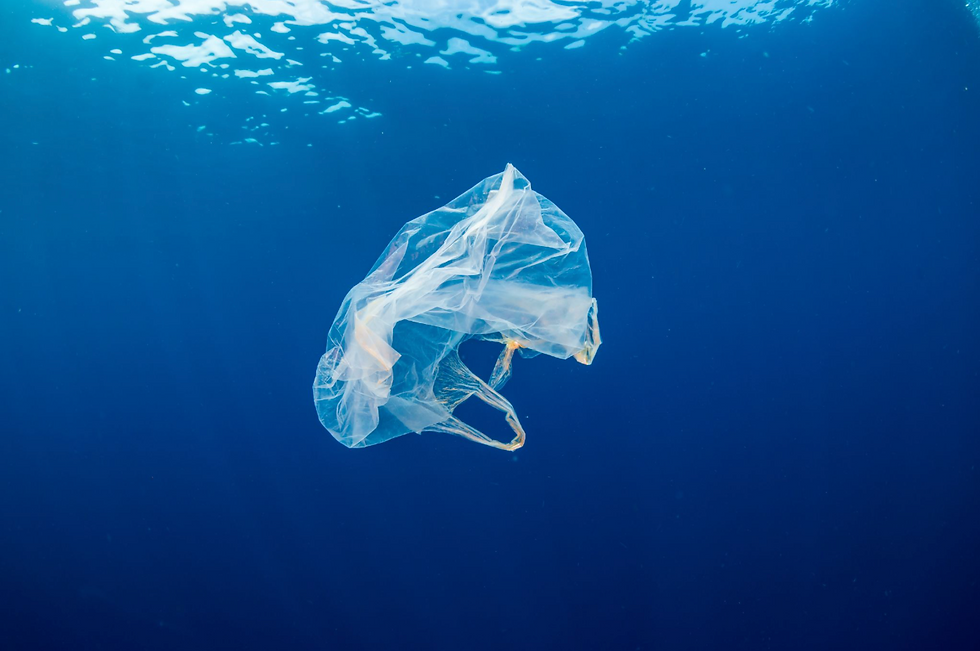
In addition to the impact bottom trawling has on habitats and species, bottom trawling also plays a role in plastic pollution due to the weight and size of the nets; it can easily become ghost gear and break down into microplastics. In a study discussed in the Marine Pollution Bulletin, an estimated 2% of fishing gear is lost to the ocean each year, including gillnets, purse seine nets, trawl nets, and longlines. In other words, approximately 218 square kilometres of trawl nets are lost at sea every year and become a threat to animals, the environment, and food security.
To target the consequences and minimize bottom trawling, federal laws and state bills, such as the Magnuson-Stevens Fishery Conservation and Management Act and California’s Senate Bill 1459 (2004), have been passed and are in effect. The main legislation governing marine fisheries management in U.S. federal waters is the Magnuson–Stevens Fishery Conservation and Management Act, and revisions like the Sustainable Fisheries Act of 1996 and the MSA Reauthorization Act of 2006 further refined and strengthened fisheries management and conservation. Thus, in more than half of U.S. federal waters, bottom trawling is forbidden, and in more than one-third of US federal waters, all bottom-tending equipment is prohibited.
Nonetheless, seabeds, sponges, and other critical habitats for crabs, salmon, and more were disrupted in Alaska despite the state having a 94% ban on bottom trawling. ‘Pelagic’ trawlers are continuing to operate even though there is evidence of their net dragging across the bottom 40% to 100% of the time. Midwater trawling essentially acts the same as bottom trawling besides the placement of the net and action, since it trawls the net in the pelagic zone and avoids raking the ocean floor. Loopholes around the protection and ban were exploited and Alaska’s Board of Fish failed to enforce the corresponding law. When midwater trawling is used, specific technology should prove that the nets are in the right zone and be reviewed by regulatory officials.
Bottom trawling is a current issue even though policies and restrictions were enacted decades ago. Implementing and enforcing a complete ban on bottom trawling may be unrealistic, but closing the gap can come in a variety of ways, such as improving net technology to avoid bycatch, using high-resolution mapping to steer clear of certain areas, and expanding bans in vulnerable ecosystems. And for consumers, paying attention to how the seafood was caught before purchasing matters too.
Citations
"Alaska's Trawlers Evade Accountability." Ocean Conservancy, 21 Mar. 2026, oceanconservancy.org/newsroom/press-release/2026/03/21/alaska-trawlers-evade-accountability/.
Allison, Nicole L., et al. "Investigating Local Trawl Fishing as a Source of Plastic Beach Litter." Marine Pollution Bulletin, vol. 205, Aug. 2024, article 116627, doi.org/10.1016/j.marpolbul.2024.116627.
"Laws & Policies." NOAA Fisheries, 28 July 2026, www.fisheries.noaa.gov/topic/laws-policies.
Mossler, Max. "The Footprint of Bottom-Trawl Fishing." Sustainable Fisheries UW, 8 Oct. 2018, sustainablefisheries-uw.org/the-footprint-of-bottom-trawl-fishing/.
"U.S. Fishery Management Council Report Finds More than 72% of Federal Waters Classified as 'Conservation Areas.'" MAFMC, 12 June 2023, www.mafmc.org/newsfeed/2023/us-fishery-management-council-report-conservation-areas.
"Understanding Bycatch." NOAA Fisheries, 8 May 2025, www.fisheries.noaa.gov/insight/understanding-bycatch.